HUMAN-EYE CONCEPT STUDY / 01

Stand beneath eight alien skies.

Scientifically grounded visual interpretations of the terrain, clouds, night sky, temperature, and name behind every planet.

These are generated educational concept images—not photographs. The four giant planets have no solid surface, so their views float near the upper cloud deck.

LIVE ORBITAL VIEW / 00

Watch the system move.

Select any body to inspect its environment. Switch between a top-down map, an angled 2.5D view, and a fully rotatable 3D model while the same simulation keeps running.

SIMULATION DATE - UTCJul 20, 2026, 20:06
VIEW
PLANET SIZE
The Sun, eight planets, Earth, and its Moon move through compressed projected orbits.2D TOP VIEW - DISTANCES COMPRESSED BY √AU / BODY SIZES ENLARGED
Concept view from Earth
SELECTED BODY

Earth

Ocean world - 1.00 AU - 365.3-day orbit

Open full surface card ↓
Surface / cloud deck
Oceans cover about 71% of the planet, alongside continents, mountains, deserts, forests, and ice.
Look up
Water clouds cross a blue daytime sky; stars, planets, meteors, aurorae, and the Moon appear at night.
Temperature
Global mean surface temperature: about 15 C.
Name origin
A roughly 1,000-year-old Germanic name meaning simply 'the ground.'
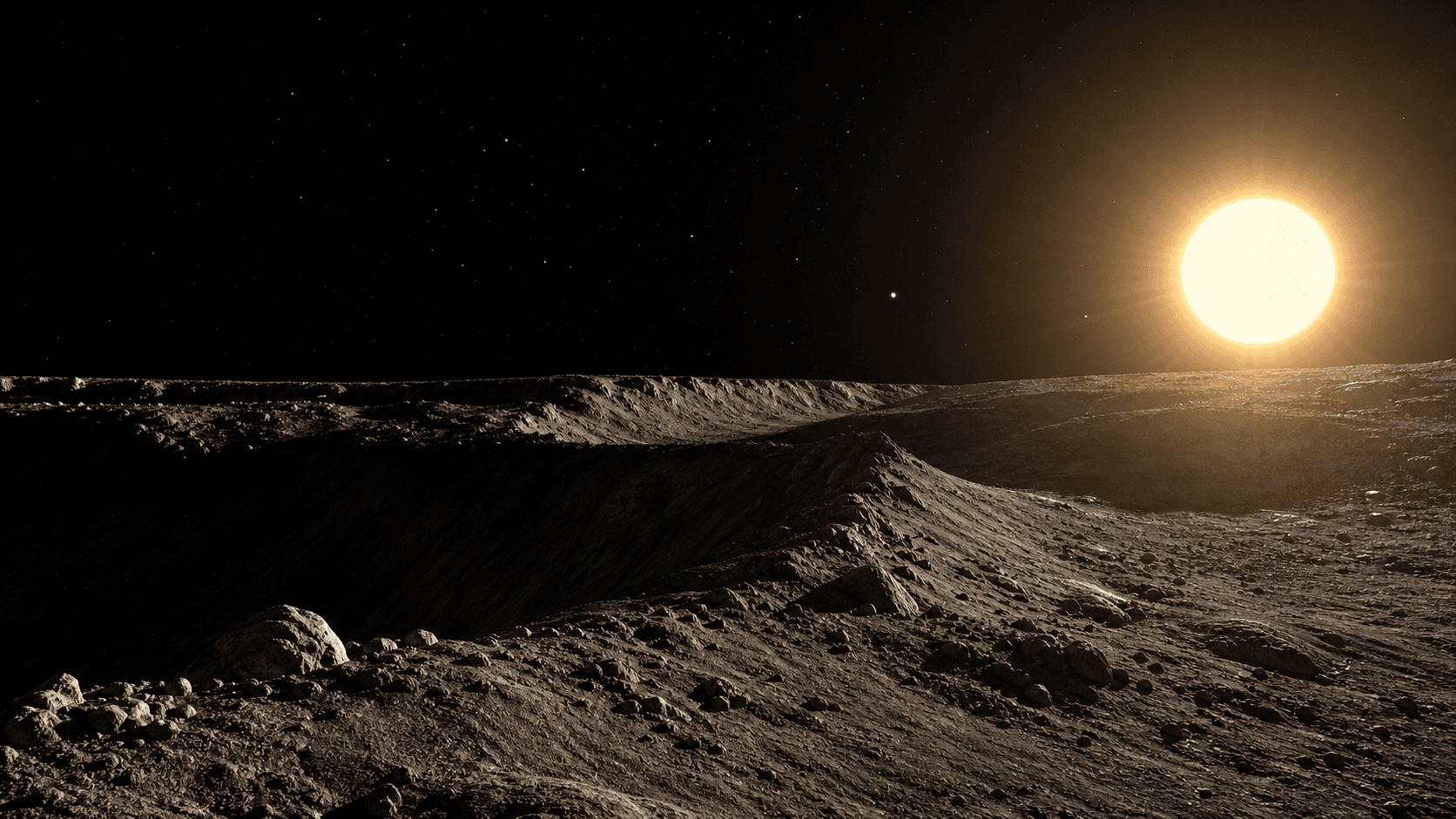
Concept view from Mercury showing cratered grey terrain beneath a black sky and an enormous Sun01

Mercury

Rocky world
Surface / cloud deck
Grey-brown rock, impact craters, sharp shadows, and long cliffs. There is almost no atmosphere and therefore no weather or clouds.
Look up
The sky stays black even during the day. Stars may remain visible, while the Sun looks more than three times larger than it does from Earth.
Temperature
About 430°C by day and −180°C at night.
Name origin
Named for Mercury, the swift messenger god of ancient Rome.
NASA fact source ↗
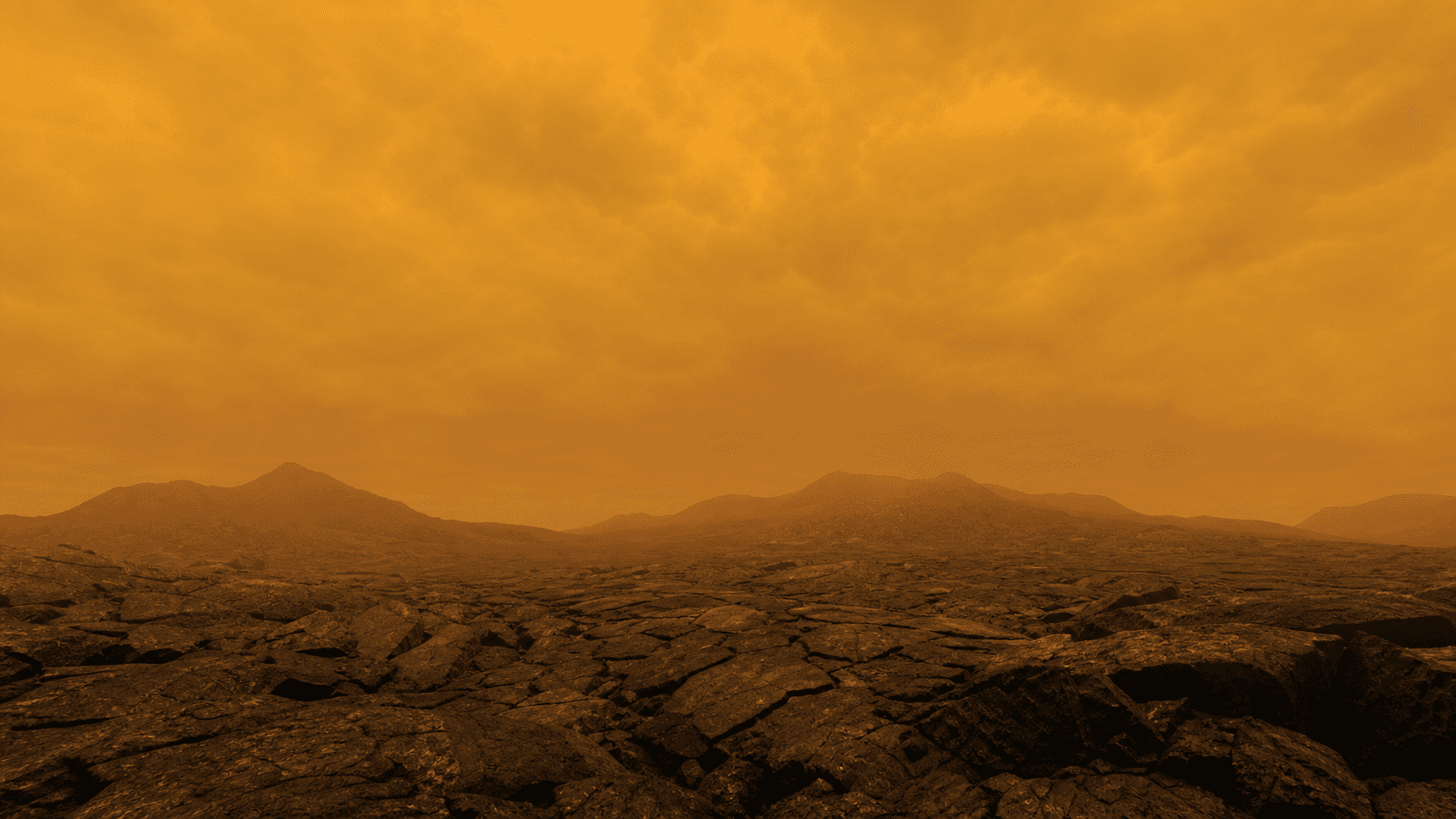
Concept view from Venus showing fractured volcanic ground beneath a dense orange cloud ceiling02

Venus

Rocky world
Surface / cloud deck
Dark volcanic rock sits beneath an extremely dense carbon-dioxide atmosphere. The pressure is roughly 93 times Earth's sea-level pressure.
Look up
A murky orange-yellow glow fills the sky. Permanent sulfuric-acid clouds hide the stars and would usually make the Sun only a vague bright patch, if visible at all.
Temperature
About 467°C across nearly the entire surface.
Name origin
Named for Venus, the Roman goddess of love and beauty; her Greek counterpart was Aphrodite.
NASA fact source ↗
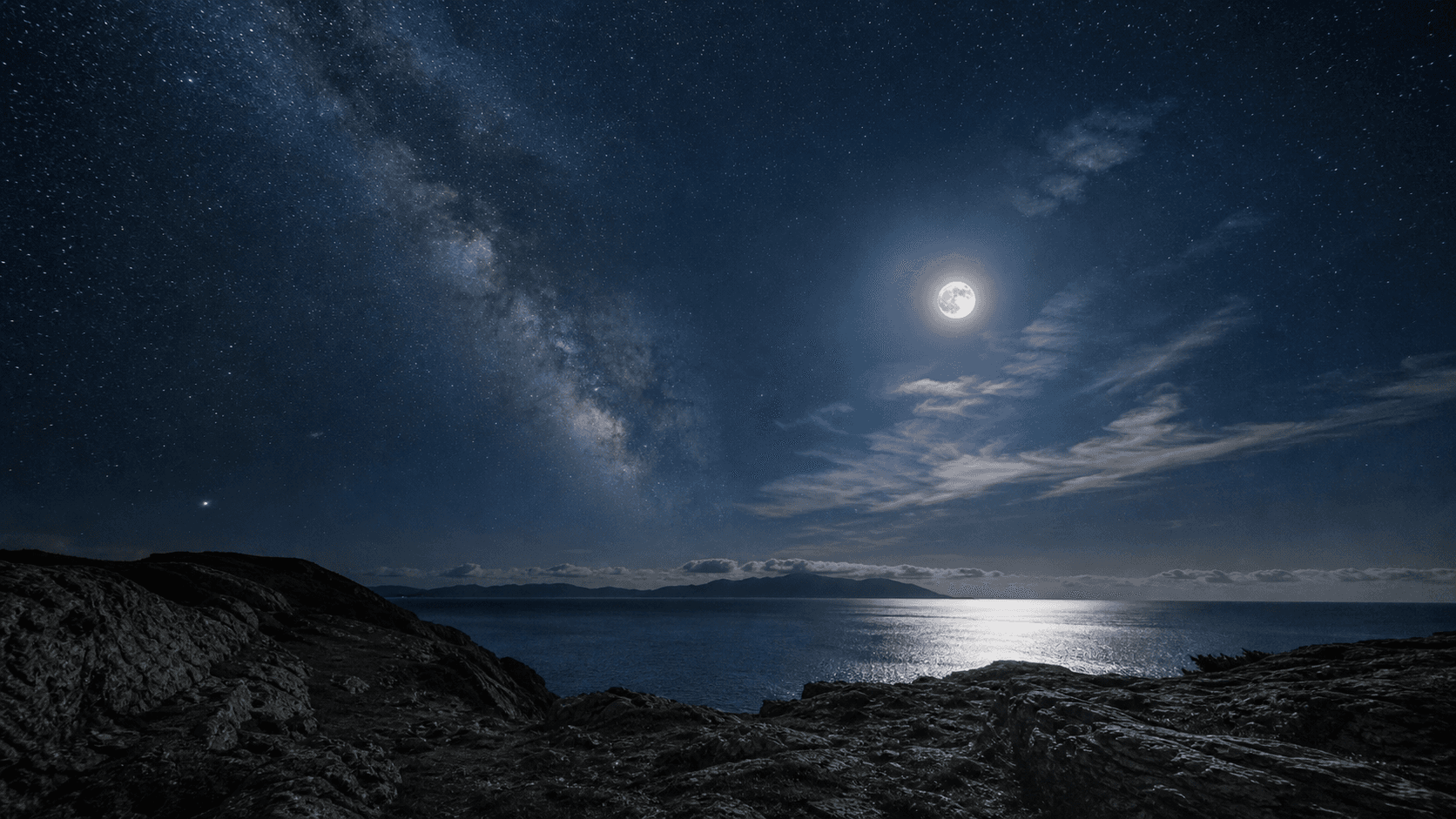
Moonlit terrestrial coast beneath stars, the Milky Way, and scattered water clouds03

Earth

Ocean world
Surface / cloud deck
Oceans cover about 71% of the planet, alongside continents, mountains, deserts, ice, forests, and cities.
Look up
Water clouds cross a blue daytime sky. At night, stars, planets, meteors, aurorae, and one unusually prominent Moon may be visible.
Temperature
Global mean surface temperature: about 15°C.
Name origin
Earth is a roughly 1,000-year-old Germanic name meaning simply “the ground.”
NASA fact source ↗
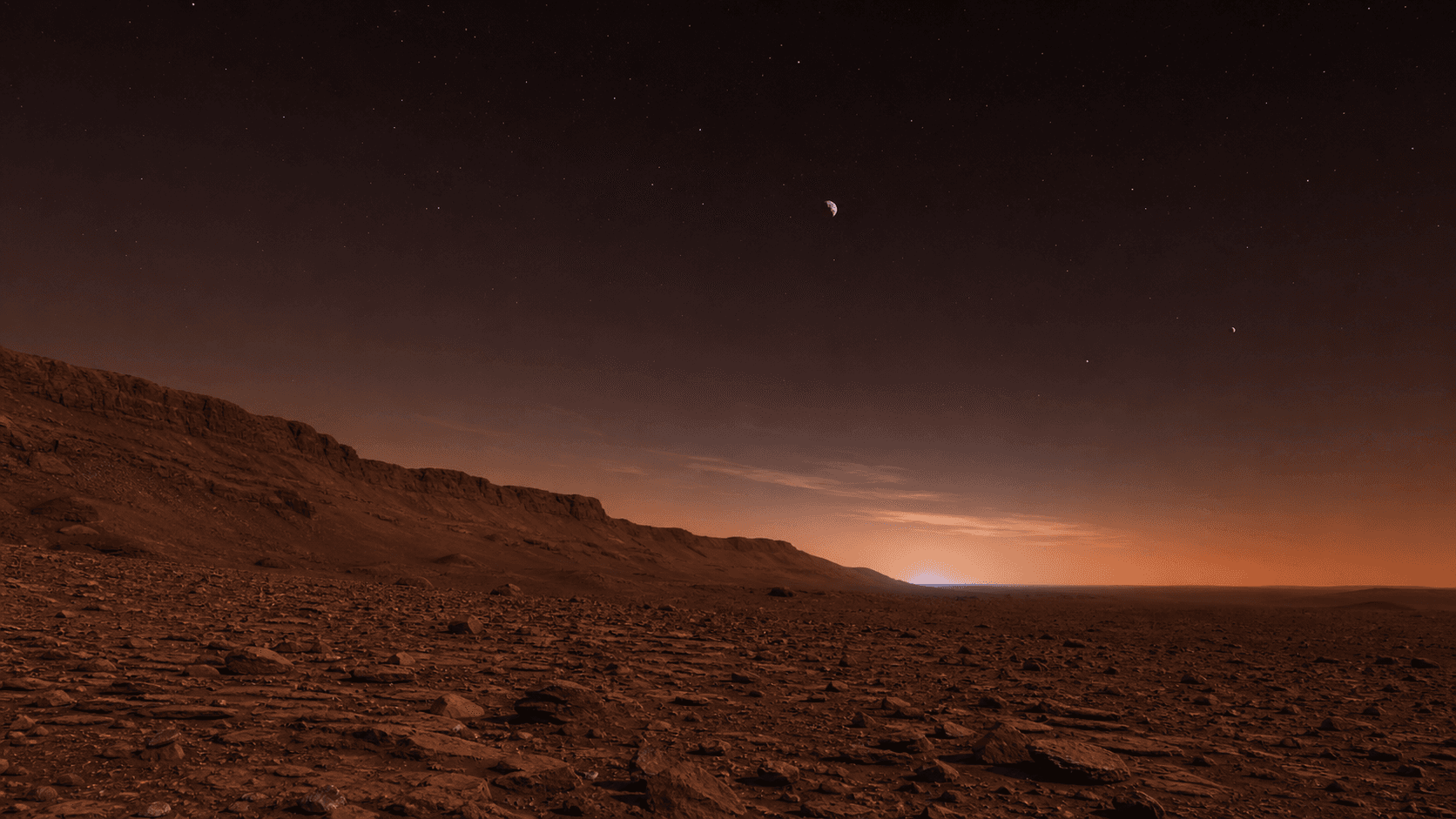
Concept view from Mars showing a rust-red rocky plain, stars, and two small moons after sunset04

Mars

Rocky world
Surface / cloud deck
A cold, dusty desert of iron-rich rock, dunes, craters, ancient channels, enormous volcanoes, and deep canyons.
Look up
Fine dust creates a hazy butterscotch daytime sky and a bluish glow around sunset. At night the stars return, accompanied by tiny Phobos and Deimos.
Temperature
Roughly −153°C to 20°C; the global mean is near −65°C.
Name origin
Named for the Roman god of war. Ancient Egyptians called it Her Desher, meaning “the red one.”
NASA fact source ↗
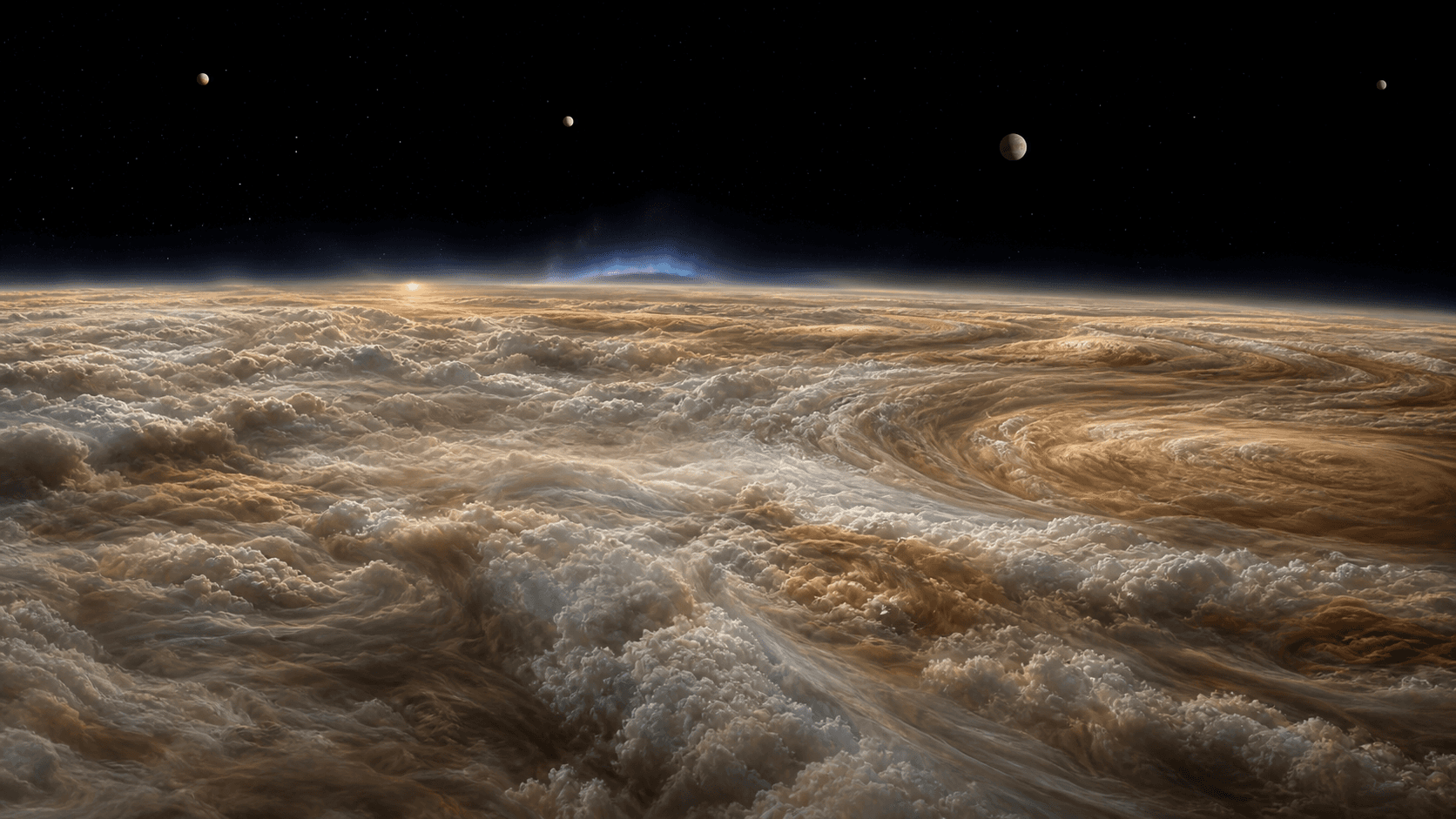
Concept view above Jupiter's turbulent cream and amber cloud deck with moons and an auroral glow overhead05

Jupiter

Gas giant · no solid surface
Surface / cloud deck
There is nowhere to stand. The preview floats near the upper ammonia-cloud deck, above deeper ammonium-hydrosulfide and water-cloud layers.
Look up
Clouds form endless cream, amber, rust, and white bands. Above the haze, the sky darkens toward space; the four large Galilean moons and powerful polar aurorae may appear.
Temperature
About −110°C at the pressure level comparable to Earth's sea level; it becomes far hotter deeper down.
Name origin
Named for Jupiter, king of the gods in Roman mythology; the Greek counterpart was Zeus.
NASA fact source ↗
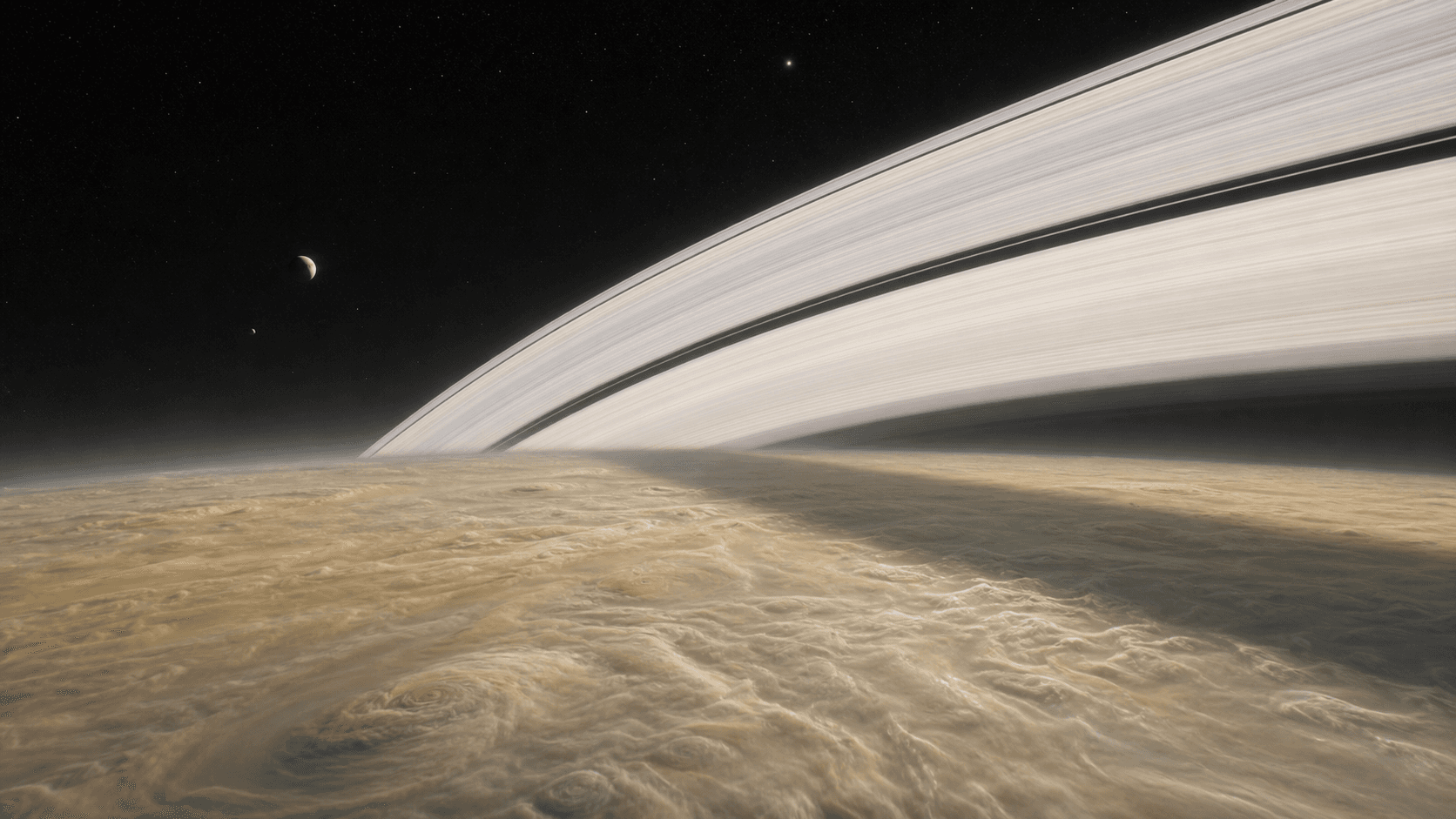
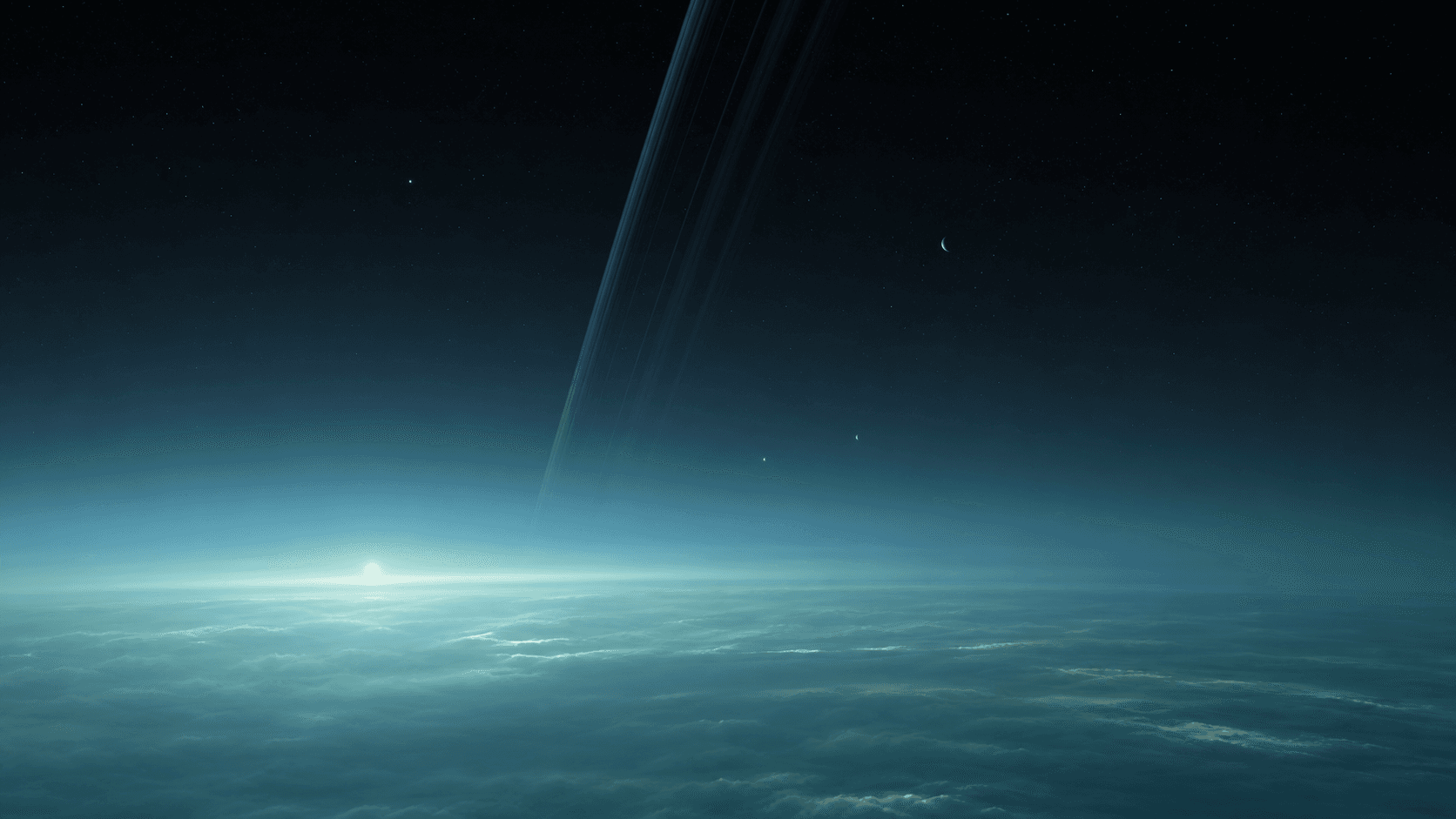
Concept view above Saturn's pale golden cloud deck with its immense rings spanning the sky06

Saturn

Gas giant · no solid surface
Surface / cloud deck
There is no true ground—only pale bands of hydrogen, helium, and ammonia clouds that become denser and hotter with depth.
Look up
From the cloud tops, the mostly white icy rings could sweep across the sky, split by dark gaps and accompanied by small moons. Their appearance changes with latitude and season.
Temperature
About −140°C at the pressure level comparable to Earth's sea level.
Name origin
Named for Saturn, the Roman god of agriculture and wealth and mythological father of Jupiter.
NASA fact source ↗
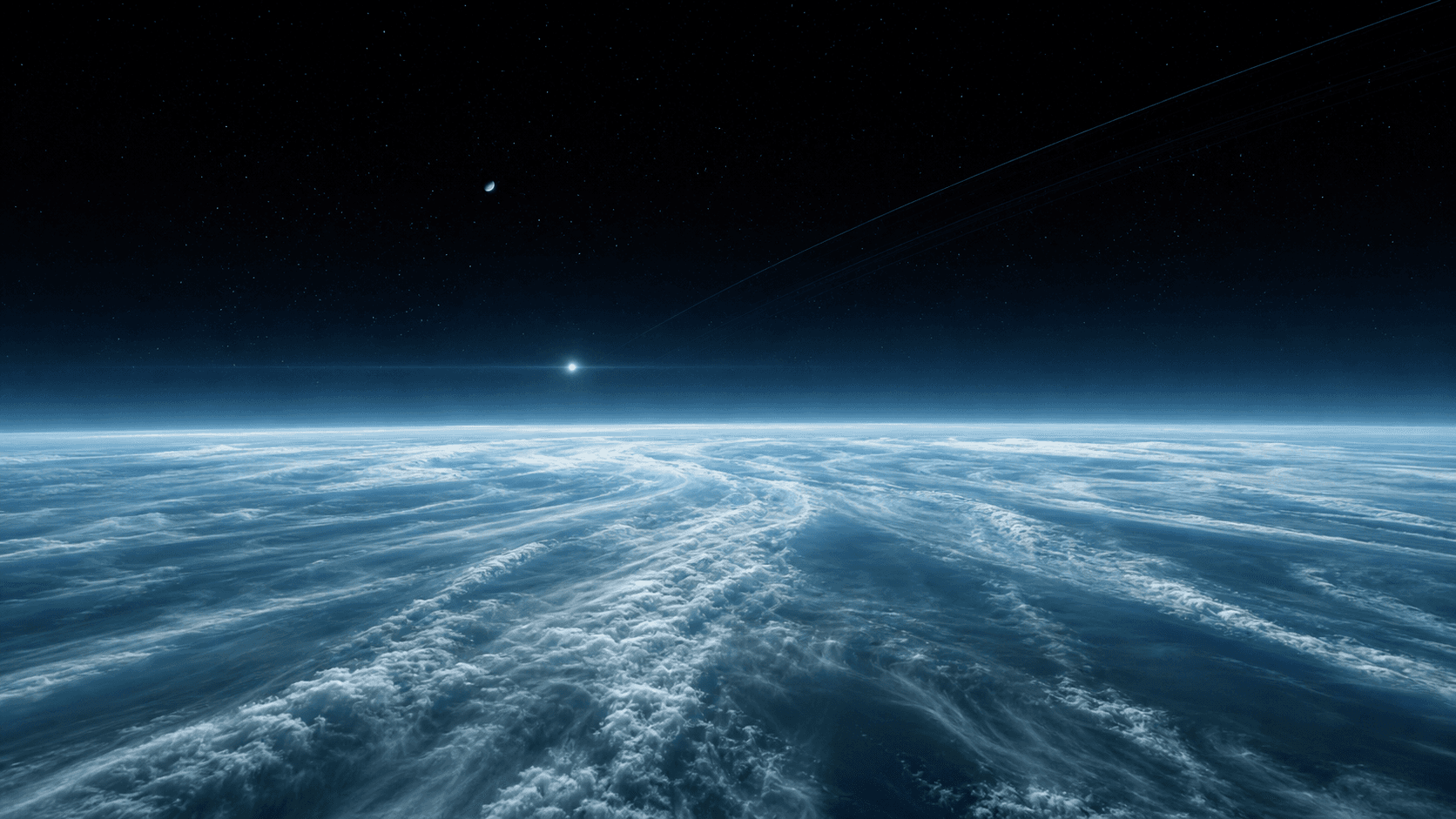
Concept view above Uranus's cyan methane cloud deck beneath a dark sky with faint rings and moons07

Uranus

Ice giant · no solid surface
Surface / cloud deck
No solid surface exists. Pale cyan methane haze covers deep, hot fluids rich in water, methane, and ammonia.
Look up
Sunlight is very weak. Above the blue-green haze, narrow dark rings, small moons, occasional bright clouds, stars, and oddly positioned aurorae may be visible.
Temperature
About −195°C on average; parts of the atmosphere reach roughly −224°C.
Name origin
William Herschel proposed Georgium Sidus—“George's Star.” The accepted name became Uranus, the Greek god of the sky.
NASA fact source ↗
Concept view above Neptune's blue-cyan windswept cloud deck with a tiny Sun, faint rings, and Triton08

Neptune

Ice giant · no solid surface
Surface / cloud deck
No solid ground exists. Hydrogen, helium, and methane atmosphere gradually merges into deep, dense fluids above a heavy core.
Look up
Even high noon resembles dim twilight. White methane-ice clouds race through blue-cyan haze; Triton and faint dusty rings may sometimes appear against a dark upper sky.
Temperature
About −200°C at the pressure level comparable to Earth's sea level.
Name origin
Named for Neptune, the Roman god of the sea. Galileo had unknowingly recorded the object as a fixed star in 1612 and 1613.
NASA fact source ↗